
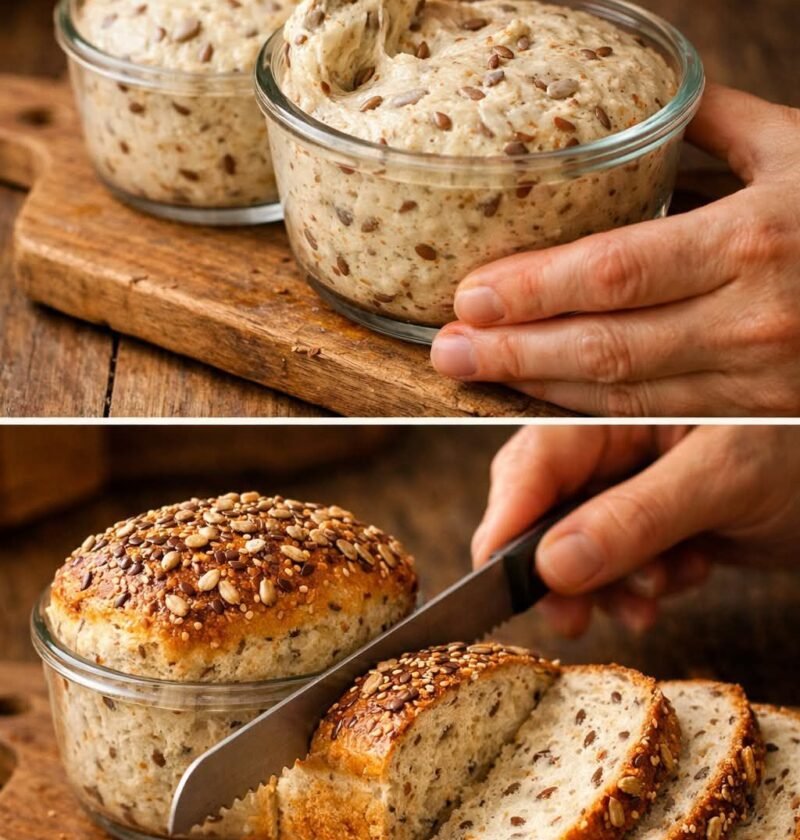
Sourdough Bread in a Jar – Complete Step-by-Step Recipe
Sourdough bread in a jar is a unique and practical way to bake homemade sourdough bread. Unlike traditional loaf baking, bread baked in glass jars creates individual portions that stay fresh longer and can be stored conveniently. These charming jar loaves are perfect for gifts, camping trips, meal prep, or simply enjoying fresh sourdough in smaller servings.
This comprehensive recipe will guide you through making delicious sourdough bread in jars, from preparing the sourdough starter to baking and storing the finished bread.
What Is Sourdough Bread in a Jar?
Sourdough bread in a jar is bread dough fermented with a natural sourdough starter and baked inside heat-safe glass jars. The jars act as mini bread pans, producing individual cylindrical loaves with a tender crumb and crisp crust.
The natural fermentation process gives the bread:
- Better flavor
- Improved digestibility
- Longer shelf life
- A pleasant tangy taste
- Enhanced nutritional value
Ingredients
For the Active Sourdough Starter
If you already have an active starter, skip this section.
- 50 grams sourdough starter
- 50 grams bread flour
- 50 grams water
Feed your starter 4–8 hours before baking until it becomes bubbly and doubles in size.
For the Bread Dough
Makes approximately 4 medium jar loaves.
Dry Ingredients
- 500 grams bread flour
- 10 grams salt
Wet Ingredients
- 350 grams water (room temperature)
- 100 grams active sourdough starter
Optional Add-ins
Choose any combination:
- 2 tablespoons honey
- 1 tablespoon olive oil
- ½ cup sunflower seeds
- ½ cup pumpkin seeds
- 1 teaspoon dried herbs
- ½ cup shredded cheese
Equipment Needed
- 4 wide-mouth glass canning jars (16-ounce size)
- Mixing bowl
- Kitchen scale
- Dough scraper
- Measuring spoons
- Clean towel
- Oven
- Cooling rack
Important Safety Note
Only use oven-safe canning jars designed for heat exposure. Inspect jars for cracks or chips before use.
Step 1: Prepare the Starter
An active starter is the heart of good sourdough bread.
Feed your starter using equal weights of flour and water.
For example:
- 50 grams starter
- 50 grams flour
- 50 grams water
Mix thoroughly and leave at room temperature.
The starter is ready when:
- It doubles in volume
- Bubbles are visible throughout
- It smells pleasantly sour
- A small spoonful floats in water
This usually takes 4–8 hours depending on room temperature.
Step 2: Mix the Dough
In a large mixing bowl combine:
- 350 grams water
- 100 grams active starter
Stir until the starter dissolves.
Add:
- 500 grams bread flour
Mix until no dry flour remains.
The dough will appear rough and shaggy.
Cover and let rest for 30 minutes.
This resting period is called the autolyse stage and helps gluten develop naturally.
Step 3: Add Salt
After the autolyse period:
Add:
- 10 grams salt
Wet your hands slightly and work the salt into the dough.
Squeeze and fold until fully incorporated.
The dough should become smoother and more elastic.
Step 4: Stretch and Fold
Rather than kneading heavily, sourdough benefits from gentle folds.
Every 30 minutes for the next 2 hours:
- Grab one side of the dough.
- Stretch upward.
- Fold over the center.
- Rotate the bowl.
- Repeat four times.
Perform four sets of folds total.
After each set, the dough will become stronger and smoother.
Step 5: Bulk Fermentation
Cover the bowl and allow the dough to ferment.
Fermentation Time
- 4–6 hours at 75°F (24°C)
- 6–8 hours at cooler temperatures
Signs fermentation is complete:
- Dough has increased by about 50%
- Surface appears puffy
- Bubbles are visible
- Dough feels airy
Avoid over-proofing because the bread may collapse in the jars.
Step 6: Prepare the Jars
Wash and dry the jars thoroughly.
Grease lightly with:
- Butter
- Coconut oil
- Olive oil
Pay special attention to the bottom and sides.
This helps prevent sticking.
Step 7: Shape the Dough
Turn dough onto a lightly floured surface.
Divide into four equal pieces.
Each portion should weigh approximately:
150–180 grams
Shape each piece into a tight ball.
To shape:
- Pull edges toward the center.
- Turn seam-side down.
- Rotate while dragging gently across the surface.
This creates tension and helps the bread rise upward.
Step 8: Fill the Jars
Place one dough ball into each prepared jar.
The dough should fill about one-third of the jar.
Leave plenty of room for expansion.
Cover jars loosely with:
- Plastic wrap
- Clean kitchen towels
- Loose jar lids
Do not seal tightly.
The dough must be able to expand.
Step 9: Final Proof
Allow the dough to rise in the jars.
Proofing Time
2–4 hours at room temperature.
The exact time depends on:
- Starter strength
- Room temperature
- Dough hydration
The dough should rise to approximately:
- Half to two-thirds of the jar height
Do not let the dough reach the very top before baking.
Step 10: Preheat the Oven
Preheat oven to:
220°C (425°F)
Allow at least 30 minutes for thorough heating.
Position a rack in the center of the oven.
Step 11: Bake the Bread
Place jars on a baking sheet.
Bake for:
- 30–35 minutes
The tops should become:
- Golden brown
- Firm to the touch
Internal temperature should reach:
93–96°C (200–205°F)
for fully baked bread.
Optional Lid Method for Storage
If you want shelf-stable style bread for short-term storage:
- Bake for 25 minutes.
- Carefully place sterilized lids on jars.
- Return to oven for 5–10 minutes.
As the jars cool, a vacuum seal may form.
However, this method does not replace proper pressure canning and should not be used for long-term preservation.
Step 12: Cool Completely
Remove jars carefully.
Allow them to cool for 10 minutes.
Run a butter knife around the edges if needed.
Remove bread from jars and transfer to a cooling rack.
Cool for at least:
- 1 hour
before slicing.
Cutting too early can create a gummy texture.
Texture and Flavor
Properly baked sourdough bread in jars should have:
Crust
- Golden brown
- Slightly crisp
- Aromatic
Crumb
- Soft
- Moist
- Evenly aerated
Flavor
- Mild tanginess
- Nutty wheat notes
- Rich fermentation character
Flavor Variations
Garlic Herb Sourdough
Add:
- 2 teaspoons dried rosemary
- 1 teaspoon thyme
- 2 minced garlic cloves
Produces a fragrant savory loaf.
Honey Oat Sourdough
Add:
- 2 tablespoons honey
- ½ cup rolled oats
Creates a slightly sweet breakfast bread.
Cheese Sourdough
Add:
- 1 cup shredded cheddar cheese
Perfect for sandwiches and soups.
Seeded Artisan Sourdough
Add:
- Pumpkin seeds
- Sunflower seeds
- Sesame seeds
This version provides extra crunch and nutrition.
Storage Instructions
Room Temperature
Store in an airtight container:
- Up to 3 days
Refrigerator
Store for:
- Up to 1 week
Warm before serving for best texture.
Freezer
Wrap tightly in plastic wrap and foil.
Freeze for:
- Up to 3 months
Thaw overnight before reheating.
Common Problems and Solutions
Bread Didn’t Rise
Possible causes:
- Weak starter
- Under-fermentation
- Cold room temperature
Solution:
Use a stronger, recently fed starter and allow more proofing time.
Dense Texture
Possible causes:
- Insufficient fermentation
- Too much flour
- Incomplete gluten development
Solution:
Increase fermentation time and perform all stretch-and-fold sessions.
Bread Sticks to Jar
Possible causes:
- Insufficient greasing
- Damaged jar surface
Solution:
Grease generously before adding dough.
Bread Overflowed from Jar
Possible causes:
- Over-proofing
- Too much dough per jar
Solution:
Fill jars only one-third full before proofing.
Serving Suggestions
Sourdough bread in a jar pairs wonderfully with:
- Butter and jam
- Soup
- Stew
- Cheese boards
- Sandwich fillings
- Avocado toast
- Olive oil and balsamic vinegar
Because the loaves are smaller, they are ideal for individual servings and entertaining guests.
Final Thoughts
Sourdough bread in a jar combines the rich flavor of traditional sourdough with the convenience of individually portioned loaves. The natural fermentation process creates exceptional taste and texture, while the jars provide a unique presentation that is both practical and attractive. Whether you are baking for family meals, gifting homemade bread, or experimenting with artisan techniques, this sourdough bread in a jar recipe delivers reliable, delicious results with a beautiful rustic appearance every time.