
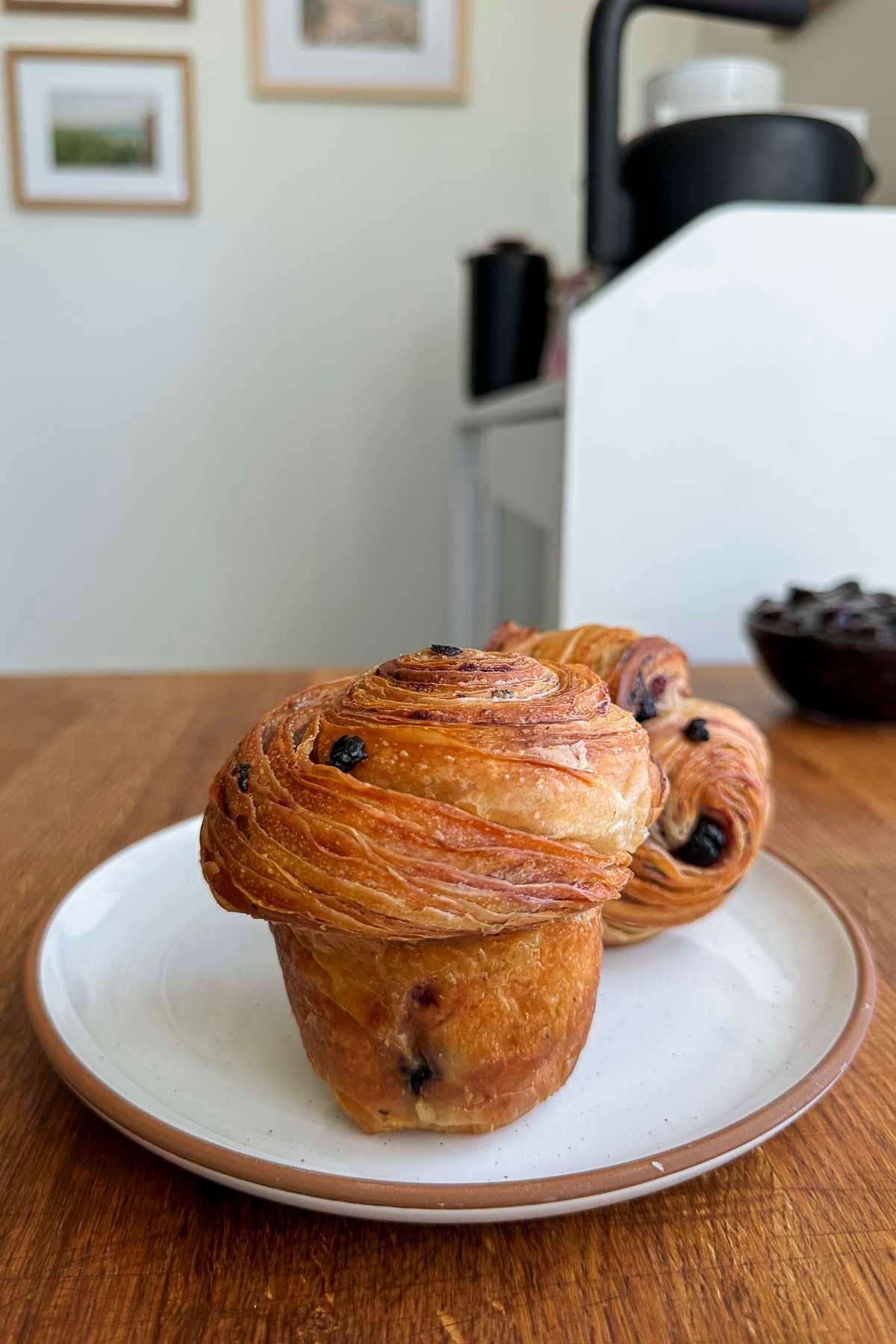
Sourdough Blueberry Croissants – Full Homemade Recipe
Sourdough blueberry croissants combine the deep flavor of naturally fermented dough with buttery laminated layers and a sweet blueberry filling. Unlike standard croissants made with commercial yeast alone, sourdough croissants develop a richer taste, a slight tang, and a more complex aroma. The addition of blueberry filling creates a balance between flaky pastry and fruity sweetness. This recipe takes time because croissants rely on fermentation and repeated folding, but the process rewards patience with bakery-style results.
This recipe makes approximately 10–12 medium croissants.
Preparation Time
- Active preparation time: 2–3 hours
- Fermentation/resting time: 12–18 hours
- Chilling and laminating time: 3–4 hours
- Baking time: 20–25 minutes
- Total time: Around 18–24 hours
Ingredients
For the sourdough starter
You need an active and mature starter:
- 100 g active sourdough starter (fed and bubbly)
The starter should be at peak activity before using it. Feed it around 4–6 hours before beginning if kept at room temperature.
For the croissant dough
- 500 g bread flour
- 60 g granulated sugar
- 10 g salt
- 250 ml whole milk, slightly warm
- 100 g active sourdough starter
- 50 g unsalted butter, softened
- 1 egg
For laminating butter
- 250 g unsalted butter, cold but workable
Choose high-fat European-style butter if available because it creates better layers.
For blueberry filling
- 250 g fresh blueberries
- 60 g sugar
- 1 tablespoon lemon juice
- 1 tablespoon cornstarch
- 2 tablespoons water
- 1 teaspoon vanilla extract
For egg wash
- 1 egg
- 1 tablespoon milk
Equipment Needed
- Rolling pin
- Mixing bowls
- Plastic wrap
- Pastry brush
- Baking tray
- Parchment paper
- Sharp knife or pizza cutter
Step 1: Prepare the Sourdough Dough
In a large mixing bowl, combine the bread flour, sugar, and salt. Stir thoroughly so the ingredients distribute evenly.
In a separate bowl, mix:
- Warm milk
- Active sourdough starter
- Egg
- Softened butter
Whisk these wet ingredients until smooth.
Slowly pour the wet mixture into the flour mixture and stir until a rough dough forms.
Transfer the dough onto a lightly floured surface and knead for approximately 8–10 minutes. The dough should become smooth and elastic.
You can also use a stand mixer with a dough hook:
- Mix on low speed for 3 minutes
- Increase to medium speed for 5 minutes
The dough should pull away from the bowl and feel soft without becoming sticky.
Shape the dough into a ball and place it in a lightly greased bowl.
Cover with plastic wrap or a damp towel.
Leave at room temperature for around 4–6 hours.
Because this recipe uses sourdough, fermentation depends on room temperature. The dough should appear slightly puffed rather than doubled.
After initial fermentation, place the dough in the refrigerator overnight for 8–12 hours.
The cold rest develops flavor and makes the dough easier to laminate.
Step 2: Prepare the Butter Block
Lamination creates the signature layers of a croissant.
Take the cold butter and place it between two sheets of parchment paper.
Using a rolling pin, pound and shape the butter into a rectangle approximately:
20 cm × 20 cm
The butter should become flat and even without softening too much.
Place the butter block into the refrigerator for around 20–30 minutes.
The goal is for the butter and dough to have similar firmness.
If butter becomes too soft, it may leak during rolling.
If it becomes too hard, it may break into chunks and ruin the layers.
Step 3: Enclose the Butter
Remove the dough from the refrigerator.
Roll it into a rectangle roughly:
40 cm × 25 cm
Place the chilled butter block in the center.
Fold both sides of dough over the butter like folding a letter so the butter becomes completely enclosed.
Pinch all seams carefully.
No butter should remain exposed.
Wrap and refrigerate for 30 minutes.
Step 4: First Fold
Lightly flour your work surface.
Roll the dough carefully into a long rectangle approximately:
60 cm long
Always roll gently and evenly from the center outward.
Fold the dough into thirds:
- Fold the top third toward the center
- Fold the bottom third over it
This is called a letter fold.
Wrap and refrigerate for 30–45 minutes.
Step 5: Second Fold
Rotate the dough 90 degrees.
Roll again into another long rectangle.
Repeat the same letter fold.
Wrap and chill for another 30–45 minutes.
Step 6: Third Fold
Perform the process one more time.
Roll.
Fold.
Chill.
Three folds create many thin alternating layers of butter and dough.
These layers separate in the oven as steam forms, producing flaky croissants.
After the third fold, refrigerate the dough for at least one hour.
Step 7: Make the Blueberry Filling
While the dough rests, prepare the filling.
Place blueberries, sugar, lemon juice, water, and vanilla extract into a saucepan.
Cook over medium heat.
Stir frequently.
As the berries heat, they begin releasing juice.
Mix cornstarch with a small amount of water in a separate bowl.
Pour this mixture into the blueberries.
Continue stirring until the filling thickens.
Cook for approximately 3–5 minutes.
The mixture should resemble thick jam.
Remove from heat.
Allow the filling to cool completely.
Warm filling can melt butter layers, so cooling is important.
Step 8: Roll and Cut the Croissants
Remove chilled dough from the refrigerator.
Roll it into a large rectangle approximately:
50 cm × 30 cm
Trim edges with a sharp knife for neat layers.
Cut long triangles.
Each triangle should be roughly:
10 cm wide at the base 25 cm long
Place a spoonful of cooled blueberry filling near the base of each triangle.
Do not overfill.
Too much filling can leak during baking.
Starting at the wide end, roll each triangle toward the tip.
As you roll:
- Stretch slightly
- Keep pressure gentle
- Maintain shape
Curve the ends inward slightly to create the traditional croissant shape.
Place the shaped croissants onto baking trays lined with parchment paper.
Leave space between each croissant because they expand during proofing.
Step 9: Final Proof
Cover croissants loosely with plastic wrap.
Allow them to proof at room temperature for around 3–5 hours.
Sourdough proofing can vary depending on temperature.
The croissants should look noticeably larger and slightly jiggly when the tray moves.
Do not rush this stage.
Under-proofed croissants may become dense.
Over-proofed croissants may collapse.
Step 10: Apply Egg Wash
Preheat oven to:
200°C (390°F)
Mix:
- 1 egg
- 1 tablespoon milk
Brush the tops gently.
Avoid brushing the cut edges because this can seal layers together.
The egg wash creates shine and golden color.
Step 11: Bake
Place trays in the preheated oven.
Bake for:
20–25 minutes
The croissants should become:
- Deep golden brown
- Crisp outside
- Light and flaky
You may rotate trays halfway through baking for even coloring.
Remove from oven and allow them to cool for 10–15 minutes.
Fresh croissants continue setting internally after leaving the oven.
Serving Suggestions
These sourdough blueberry croissants taste excellent:
- Warm with coffee
- With tea
- With fresh whipped cream
- With vanilla glaze
- With powdered sugar
- Alongside yogurt and fruit
For extra sweetness, drizzle with a simple icing made from powdered sugar and milk.
Storage Tips
Store croissants in an airtight container at room temperature for up to two days.
For longer storage:
Refrigerate for 4–5 days or freeze for up to two months.
To reheat:
Bake at 180°C (350°F) for approximately 5–8 minutes.
Avoid microwaving because it softens the flaky layers.
Helpful Tips for Success
- Keep butter cold throughout laminating.
- Rest dough if it resists rolling.
- Avoid excessive flour during rolling because too much flour changes dough texture.
- Use active sourdough starter.
- Chill immediately if butter begins softening.
- Cool filling completely before shaping.
- Allow enough proofing time.
The finished sourdough blueberry croissants should have visible layers, crisp edges, a buttery aroma, and sweet blueberry filling in the center. The combination of fermented dough, rich butter, and fruit creates a pastry that feels both rustic and elegant.