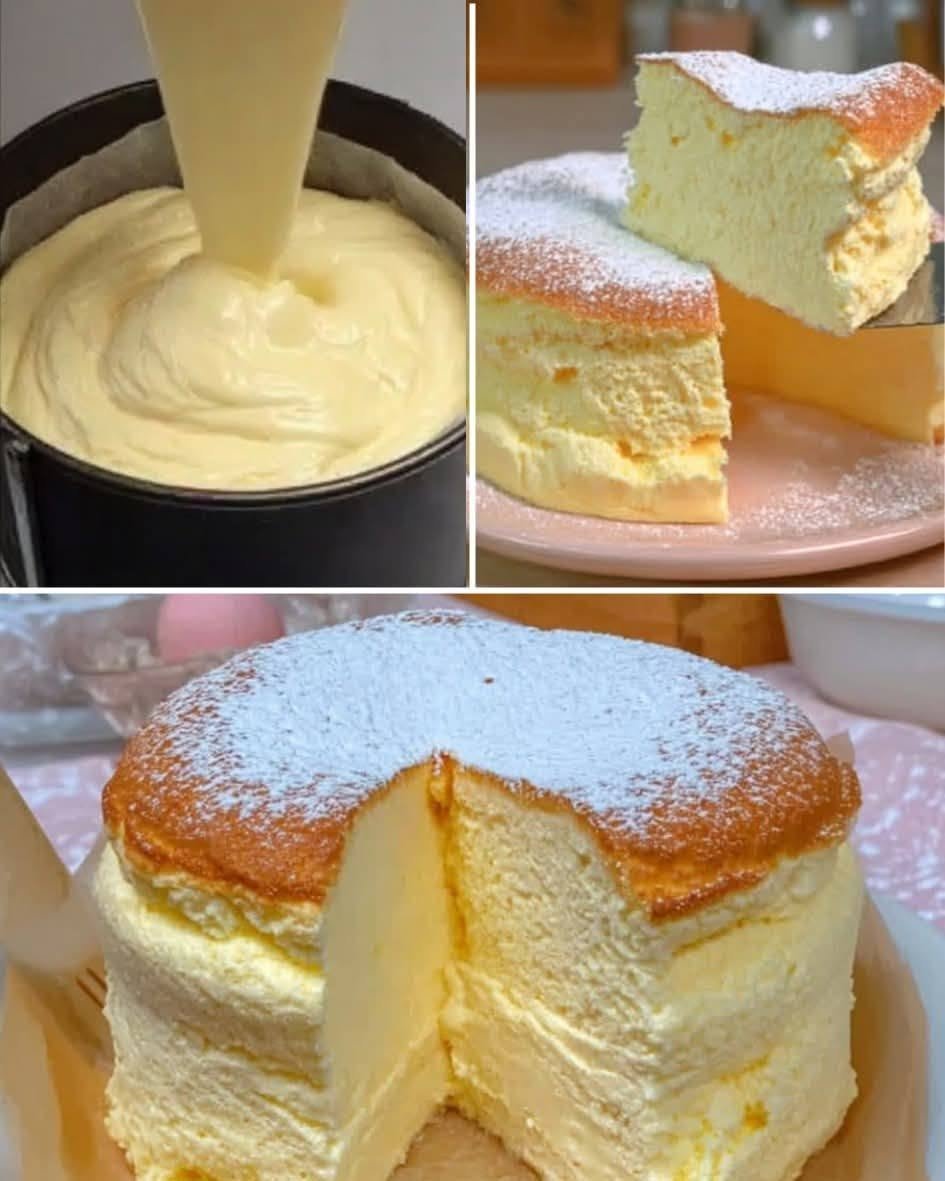
Ingredients
- 6 large eggs, separated
- ¾ cup (150 g) granulated sugar
- 1 cup (120 g) cake flour
- ¼ teaspoon salt
- 1 teaspoon vanilla extract
- 1 tablespoon fresh lemon juice
- ¼ cup (60 ml) whole milk
- ¼ cup (60 ml) vegetable oil
- ½ teaspoon cream of tartar
- Powdered sugar, for dusting
- Fresh berries, optional, for serving
- Whipped cream, optional, for serving
Instructions
1. Prepare the Oven and Pan
Preheat your oven to 325°F (165°C).
Use a 9-inch round cake pan or an angel-food-style tube pan if available.
Line the bottom of a regular cake pan with parchment paper. Do not heavily grease the sides. The batter needs something to cling to as it rises.
If using a tube pan, follow the manufacturer’s instructions regarding greasing.
2. Separate the Eggs
Carefully separate the egg whites from the yolks.
Place the egg whites in a completely clean, dry mixing bowl. Even a small amount of egg yolk or grease can prevent the whites from whipping properly.
Place the yolks in a separate bowl.
For the best results, allow the eggs to come close to room temperature before whipping the whites.
3. Prepare the Egg Yolk Batter
Whisk the egg yolks with approximately half of the sugar until the mixture becomes lighter and slightly creamy.
Add the milk, vegetable oil, vanilla extract, and lemon juice.
Whisk until smooth.
Sift the cake flour and salt into the yolk mixture.
Gently whisk until just combined.
Do not overmix. Stop as soon as the flour has disappeared.
The batter should be smooth and relatively thin.
4. Whip the Egg Whites
Add the cream of tartar to the egg whites.
Using an electric mixer, beat the whites on medium speed until they become foamy.
Gradually add the remaining sugar, a little at a time, while continuing to beat.
Increase the mixer speed to medium-high and continue beating until the egg whites reach medium-stiff to stiff peaks.
When you lift the whisk, the peak should stand upright with only a slight bend at the tip.
Avoid overbeating. Egg whites that become dry or grainy can be difficult to fold into the batter.
5. Fold the Egg Whites Into the Batter
Add approximately one-third of the whipped egg whites to the egg yolk batter.
Use a large spatula to gently fold them in.
Run the spatula down through the center of the bowl, scoop underneath the batter, and fold it over the top. Rotate the bowl and repeat.
Once the first portion is incorporated, add another third of the egg whites.
Repeat with the remaining egg whites.
Fold gently until no large white streaks remain.
Do not stir aggressively. The air trapped in the whipped egg whites is what gives the cake its signature cloud-like texture.
6. Transfer the Batter to the Pan
Pour the batter into the prepared cake pan.
Gently smooth the top with a spatula.
Tap the pan very lightly on the countertop once or twice to remove only large air pockets. Avoid excessive tapping because you don’t want to deflate the batter.
7. Bake the Cloud Cake
Place the pan in the preheated oven.
Bake for approximately 35–45 minutes, depending on the size and type of pan.
The cake should rise beautifully and become lightly golden on top.
Insert a wooden skewer into the center. It should come out clean or with a few moist crumbs attached.
Try not to open the oven door repeatedly during baking because sudden temperature changes can cause an airy cake to collapse.
8. Cool the Cake
When the cake is finished, remove it from the oven.
If using a tube pan designed for inverted cooling, turn it upside down according to the pan’s instructions and allow it to cool completely.
If using a standard cake pan, place it on a wire rack and allow it to cool for approximately 15–20 minutes.
Run a thin knife around the edges if necessary, then carefully remove the cake from the pan.
Allow it to cool completely before slicing.
9. Add the Finishing Touches
Once cooled, dust the top generously with powdered sugar.
For a simple presentation, serve it with fresh strawberries, blueberries, raspberries, or sliced peaches.
A spoonful of softly whipped cream makes an excellent accompaniment.
You can also drizzle the cake with a simple lemon glaze made from powdered sugar and fresh lemon juice.
Tips for a Fluffy Cloud Cake
Keep the egg whites clean. Any trace of yolk or grease can prevent them from whipping properly.
Use room-temperature eggs. They generally whip more easily and incorporate more smoothly.
Sift the flour. This helps create a lighter batter and reduces lumps.
Don’t overmix. Gentle folding preserves the air bubbles created by the whipped egg whites.
Don’t overbake. Excessive baking can dry out the delicate crumb.
Cool properly. Allow the cake to cool before cutting so the structure has time to stabilize.
Flavor Variations
Lemon Cloud Cake
Increase the lemon zest and add an additional teaspoon of lemon juice to the batter. Finish with a light lemon glaze.
Strawberry Cloud Cake
Serve the cake with sliced strawberries and whipped cream. You can also add a thin layer of strawberry jam between slices.
Chocolate Cloud Cake
Replace 2 tablespoons of cake flour with 2 tablespoons of unsweetened cocoa powder.
Coconut Cloud Cake
Replace some of the milk with coconut milk and add a small amount of finely shredded coconut.
Orange Cloud Cake
Replace the lemon juice with fresh orange juice and add finely grated orange zest.
Serving Suggestions
Cloud Cake is delicious served simply with powdered sugar and fresh berries.
For a more elegant dessert, place a slice on a plate and add a spoonful of whipped cream and fresh fruit.
You can also serve it with strawberry sauce, raspberry coulis, lemon curd, chocolate sauce, or caramel.
Because the cake itself is relatively light, rich toppings can be used without making the dessert feel excessively heavy.
Storage
Store the completely cooled cake in an airtight container at room temperature for approximately 2–3 days.
If your kitchen is particularly warm or if the cake is served with fresh cream, refrigerate it.
The cake can also be wrapped tightly and frozen for up to approximately 2 months. Thaw it in the refrigerator or at room temperature before serving.
Frequently Asked Questions
Why did my cloud cake collapse?
Collapsing can happen if the egg whites were under- or over-whipped, the batter was overmixed, or the cake was removed from the oven before it was fully baked.
Can I use all-purpose flour?
Yes. Cake flour produces a particularly delicate texture, but all-purpose flour can be used. Sift it well before adding it.
Why is my cake dense?
The most common causes are deflated egg whites or overmixing during the folding stage.
Can I make it without cream of tartar?
Yes. Cream of tartar helps stabilize the egg whites, but you can omit it if necessary. A small amount of lemon juice can also provide some acidity.
Final Thoughts
Cloud Cake is a wonderful dessert for anyone who loves exceptionally soft and airy cakes. Its delicate texture comes primarily from properly whipped egg whites, careful folding, and gentle baking.
Although the technique requires a little patience, the ingredient list is simple and the finished cake is remarkably elegant. Serve it with fresh berries and whipped cream for a classic dessert, or experiment with lemon, chocolate, coconut, or orange flavors.
Prep time: 20 minutes
Bake time: 35–45 minutes
Cooling time: 30–60 minutes
Total time: Approximately 1½–2 hours
Servings: 8–10
Difficulty: Intermediate

