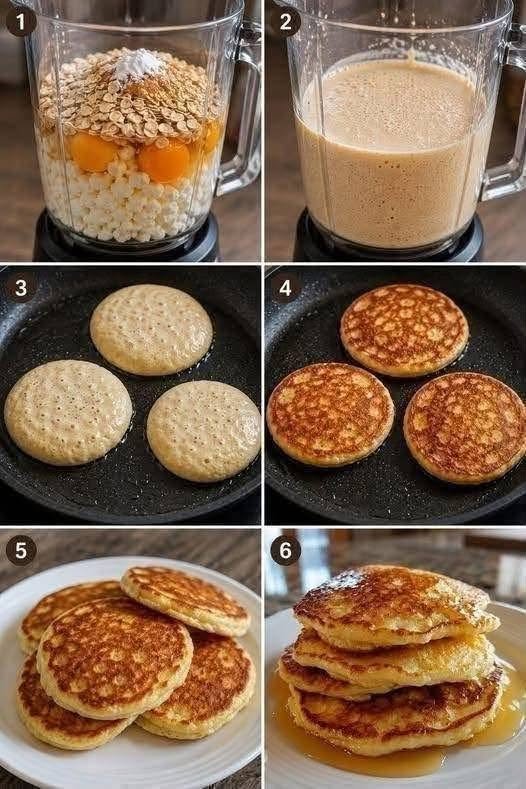
Ingredients
Dry Ingredients
- 2 cups (250 g) all-purpose flour
- 2 tablespoons granulated sugar
- 2 teaspoons baking powder
- ½ teaspoon baking soda
- ½ teaspoon salt
Wet Ingredients
- 1¾ cups (420 ml) buttermilk
- 2 large eggs
- 4 tablespoons (55 g) unsalted butter, melted and slightly cooled
- 1 teaspoon vanilla extract
For Cooking
- Butter or neutral cooking oil, as needed
For Serving
- Butter
- Maple syrup
- Fresh strawberries
- Blueberries
- Sliced bananas
- Powdered sugar
- Whipped cream, optional
- Chopped nuts, optional
Instructions
1. Prepare the Dry Ingredients
Start by adding the all-purpose flour to a large mixing bowl.
Add the sugar, baking powder, baking soda, and salt.
Whisk everything together until the ingredients are evenly distributed.
This step is important because it ensures the leavening agents are spread throughout the flour. That helps the pancakes rise evenly rather than creating pockets of baking powder or soda.
If your flour is particularly lumpy, sift it before combining it with the other ingredients.
2. Prepare the Wet Ingredients
In a separate medium-sized bowl, whisk together the buttermilk and eggs.
Add the melted butter and vanilla extract.
Whisk gently until the mixture is smooth.
Make sure the melted butter has cooled slightly before adding it. Very hot butter can partially cook the eggs.
Room-temperature eggs and buttermilk also blend more easily, although the recipe will still work if your ingredients are slightly chilled.
3. Combine the Wet and Dry Ingredients
Make a well in the center of the dry ingredients.
Pour the wet mixture into the well.
Using a whisk or rubber spatula, gently stir everything together.
Stop mixing as soon as there are no large areas of dry flour remaining.
The batter should look slightly lumpy. Don’t try to make it perfectly smooth.
Overmixing develops gluten in the flour, which can result in pancakes that are chewy, dense, or tough instead of light and fluffy.
4. Let the Batter Rest
Allow the batter to rest for approximately 5–10 minutes.
This gives the flour time to absorb the liquid and allows the leavening agents to begin working.
During this time, the batter may become slightly thicker.
If it becomes too thick to pour easily, add 1–2 tablespoons of buttermilk or milk and gently fold it in.
5. Heat the Pan
Place a large nonstick skillet, cast-iron pan, or griddle over medium heat.
Allow it to preheat for several minutes.
Lightly grease the cooking surface with butter or a small amount of neutral oil.
The pan should be hot enough for the batter to sizzle gently when it hits the surface, but it should not be smoking.
If the pan is too hot, the pancakes may become dark on the outside while remaining undercooked in the middle.
If the pan isn’t hot enough, the pancakes may spread too much and become pale.
6. Cook the First Pancakes
Pour approximately ¼ cup of batter onto the hot pan for each pancake.
Depending on the size of your skillet, you can cook two or three pancakes at a time.
Leave enough space between them so you can easily slide a spatula underneath each one.
Cook for approximately 2–3 minutes.
You should see bubbles forming across the surface, and the edges should begin to look dry and set.
The underside should be golden brown.
7. Flip Carefully
Once the pancakes are ready, slide a spatula underneath one and flip it confidently.
Cook the second side for approximately 1–2 minutes.
The pancake should be golden and cooked through.
Avoid pressing down on the pancake with your spatula. Doing so can force out the air bubbles that make the pancakes light and fluffy.
Transfer the finished pancake to a plate.
8. Continue With the Remaining Batter
Repeat with the remaining batter.
If necessary, add a small amount of butter or oil between batches.
Keep the heat at medium and adjust it slightly if the pancakes are browning too quickly or too slowly.
For consistent results, allow the pan to return to the proper temperature before adding each new batch.
9. Keep the Pancakes Warm
If you’re preparing a large stack, place the finished pancakes on a baking sheet and keep them in a 200°F (95°C) oven.
Avoid keeping them warm for too long, as prolonged heat can dry them out.
You can also loosely cover the pancakes with foil, although this may soften the crisp edges slightly.
10. Serve
Stack several pancakes on each plate.
Add a small pat of butter to the top and drizzle with maple syrup.
For a colorful presentation, add fresh berries, sliced banana, powdered sugar, or whipped cream.
Serve immediately while the pancakes are warm.
Tips for Perfectly Fluffy Pancakes
Don’t Overmix
This is perhaps the most important tip. A few lumps in the batter are perfectly normal.
Measure Flour Correctly
Too much flour can make pancakes heavy and dry. For the most accurate measurement, weigh the flour. If using measuring cups, spoon the flour into the cup and level it rather than packing it down.
Use Fresh Leavening
Baking powder and baking soda lose effectiveness over time. If your pancakes consistently turn out flat, check the freshness of your leavening ingredients.
Control the Heat
Medium heat is usually ideal. Every stove and pan behaves differently, so adjust as necessary.
Flip Only Once
Repeated flipping can interfere with even cooking and may flatten the pancakes.
Don’t Press Them
Allow the pancakes to rise naturally in the pan.
Easy Buttermilk Substitute
If you don’t have buttermilk, you can make a quick substitute.
Pour 1 tablespoon of lemon juice or white vinegar into a measuring cup.
Add enough milk to reach 1¾ cups.
Stir and allow the mixture to stand for approximately 5–10 minutes.
It may look slightly curdled. That’s normal.
Use it in the recipe just as you would regular buttermilk.
Delicious Pancake Variations
Blueberry Pancakes
Add fresh or frozen blueberries after pouring the batter onto the pan. Sprinkle them evenly over the surface before flipping.
Chocolate Chip Pancakes
Add mini chocolate chips to the batter or sprinkle them onto each pancake while the first side cooks.
Banana Pancakes
Mash one ripe banana and gently fold it into the batter. The banana adds sweetness and moisture.
Cinnamon Pancakes
Add 1 teaspoon ground cinnamon to the dry ingredients.
You can also add a pinch of nutmeg for extra warmth.
Apple Cinnamon Pancakes
Finely dice one small apple and fold it gently into the batter. Add ½ teaspoon cinnamon for a delicious fall-inspired flavor.
Lemon Poppy Seed Pancakes
Add 1 tablespoon finely grated lemon zest and 1 tablespoon poppy seeds to the batter.
Serve with fresh berries and a drizzle of honey.
Topping Ideas
Classic butter and maple syrup are always a winning combination, but there are many ways to dress up your pancakes.
Try:
- Fresh berries and Greek yogurt
- Banana and peanut butter
- Honey and chopped walnuts
- Strawberry sauce
- Blueberry compote
- Whipped cream and chocolate chips
- Apple cinnamon topping
- Powdered sugar and lemon juice
- Toasted coconut and sliced banana
For a simple fruit topping, warm fresh or frozen berries in a saucepan with a small amount of water until they become juicy and soft.
Make-Ahead and Storage
Cooked pancakes can be made ahead and stored in the refrigerator.
Allow them to cool completely before placing them in an airtight container. Separate individual pancakes with parchment paper if desired.
Refrigerate for up to approximately 3 days.
For longer storage, freeze them.
Place cooled pancakes in a single layer on a baking sheet and freeze until firm. Then transfer them to a freezer-safe bag or container.
Frozen pancakes can be reheated in a toaster, oven, or microwave.
Frequently Asked Questions
Why are my pancakes flat?
Flat pancakes can result from expired baking powder or baking soda, overly thin batter, or overmixing.
Why are my pancakes tough?
Overmixing is one of the most common causes. Mix the batter only until the ingredients are combined.
Can I use regular milk?
Yes. Buttermilk provides acidity that works with the baking soda and contributes to tenderness. Regular milk can be combined with lemon juice or vinegar as a substitute.
Why are my pancakes burning?
Your pan is probably too hot. Reduce the heat to medium or medium-low and allow the pan to cool slightly before continuing.
When should I flip the pancakes?
Flip when bubbles have appeared across the surface, the edges look set, and the underside is golden brown.
Can I add fruit directly to the batter?
Yes, although adding delicate fruit directly to each pancake after pouring the batter into the pan can make distribution easier.
Final Thoughts
Homemade pancakes are a classic breakfast for good reason. They’re quick, inexpensive, comforting, and incredibly versatile. With just a handful of basic ingredients, you can create a stack of soft, fluffy pancakes that tastes far better than anything from a boxed mix.
For the best results, measure your ingredients carefully, mix the batter gently, allow it to rest briefly, and cook the pancakes over consistent medium heat. Don’t worry about small lumps in the batter—they’re perfectly normal.
Once you’ve mastered the basic recipe, experiment with blueberries, bananas, chocolate chips, apples, cinnamon, or lemon. Finish your pancakes with butter and maple syrup, or create a colorful breakfast with fresh fruit, yogurt, nuts, and whipped cream.
Whether you’re making breakfast for your family or enjoying a quiet weekend morning, these homemade pancakes are a simple recipe you’ll want to make again and again.
Prep time: 10 minutes
Resting time: 5–10 minutes
Cook time: 15–20 minutes
Total time: Approximately 30–40 minutes
Servings: 4–6
Difficulty: Easy

