Ingredients
For the Pizza Dough
- 150 g sourdough discard
- 250 g all-purpose or bread flour
- 150 g lukewarm water
- 1 teaspoon instant yeast
- 1 teaspoon sugar or honey
- 1½ teaspoons salt
- 1 tablespoon olive oil
For the Pizza Sauce
- ½ cup tomato passata or crushed tomatoes
- 1 tablespoon tomato paste
- 1 tablespoon olive oil
- 1 small garlic clove, minced
- ½ teaspoon dried oregano
- ½ teaspoon dried basil
- ¼ teaspoon salt
- ¼ teaspoon black pepper
For Topping
- 1½ cups shredded mozzarella cheese
- ½ cup sliced mushrooms
- ½ cup sliced bell peppers
- ¼ cup sliced black or green olives
- ¼ cup thinly sliced onion
- Fresh basil or dried herbs, optional
- Cooked chicken or other preferred toppings, optional
Preparing the Dough
Place the sourdough discard, lukewarm water, instant yeast, and sugar in a large mixing bowl.
Stir until the mixture is reasonably smooth.
Add the flour and salt.
Mix with a wooden spoon or your hands until a rough dough forms.
Add the olive oil and continue mixing until it is incorporated.
The dough should feel soft and slightly sticky. Avoid adding too much extra flour because a wetter dough can produce a lighter, crispier crust.
Kneading
Transfer the dough to a lightly floured work surface.
Knead for approximately 5–7 minutes, or until the dough becomes smoother and more elastic.
Alternatively, you can knead it directly in the mixing bowl by repeatedly stretching and folding the dough.
If the dough is extremely sticky, lightly oil your hands rather than adding large quantities of flour.
Shape the dough into a ball and place it in a lightly oiled bowl.
Cover the bowl with a clean kitchen towel or plastic wrap.
First Rise
Allow the dough to rise in a warm place for approximately 1–2 hours.
Because this recipe uses both sourdough discard and instant yeast, the dough should rise relatively quickly.
The exact timing depends on your room temperature.
The dough does not necessarily need to double in size. It should simply become noticeably softer, puffier, and more elastic.
For additional sourdough flavor, you can refrigerate the dough after the initial rise for several hours or overnight.
Preparing the Pizza Sauce
While the dough is rising, prepare the sauce.
Combine the crushed tomatoes, tomato paste, olive oil, garlic, oregano, basil, salt, and black pepper in a small bowl.
Mix thoroughly.
Taste and adjust the seasoning if necessary.
There is no need to cook the sauce. A simple uncooked tomato sauce allows the fresh tomato flavor to remain bright while it cooks in the oven.
If you prefer a thicker sauce, simmer the mixture over low heat for approximately 5–10 minutes and allow it to cool completely before using.
Preparing the Oven
Preheat your oven to 240–250°C (465–480°F), or as high as your oven safely allows for pizza baking.
Place a pizza stone, pizza steel, or heavy baking tray inside the oven while it preheats.
Allow the oven and baking surface to heat for at least 30 minutes.
A very hot baking surface helps the bottom of the pizza become crisp while the top cooks quickly.
Shaping the Pizza
Once the dough has risen, transfer it to a lightly floured surface.
Divide the dough into two equal portions for two medium pizzas, or keep it whole for one large pizza.
Gently shape each portion into a ball.
Allow the dough to rest for approximately 10–15 minutes.
Place one dough ball on a lightly floured surface.
Using your fingertips, gently press the dough outward from the center.
Leave a slightly thicker border around the edge to create a puffy crust.
Continue stretching until the pizza reaches approximately 25–30 cm in diameter.
Avoid using a rolling pin if possible because it can flatten the air bubbles in the dough and produce a denser crust.
Adding the Toppings
Carefully transfer the stretched dough onto a sheet of parchment paper or pizza peel.
Spread a thin layer of tomato sauce over the surface, leaving approximately 1–2 cm around the edge.
Sprinkle the mozzarella evenly over the sauce.
Add mushrooms, bell peppers, onions, olives, or your other preferred toppings.
Do not overload the pizza. Too many toppings can release moisture and make the center soggy.
Finish with a light sprinkle of oregano or freshly ground black pepper.
Baking the Pizza
Carefully transfer the pizza onto the preheated stone, steel, or baking tray.
Bake for approximately 8–12 minutes, depending on your oven temperature and the thickness of the crust.
The pizza is ready when the cheese is melted and bubbling, the toppings are cooked, and the crust is golden brown with darker spots around the edges.
For an extra-crispy crust, bake for another minute or two, watching carefully so the cheese does not burn.
If making a second pizza, allow the oven and baking surface to return to full temperature before baking it.
Finishing the Pizza
Remove the pizza from the oven and allow it to rest for 2–3 minutes.
Drizzle with a little olive oil and sprinkle with fresh basil, oregano, or chili flakes.
Use a sharp pizza cutter or knife to slice it into wedges.
Serve immediately while the cheese is hot and the crust is crisp.
Topping Ideas
Classic Margherita
Use tomato sauce, mozzarella, fresh basil, and a drizzle of olive oil.
Vegetable
Top with mushrooms, bell peppers, onions, olives, spinach, and mozzarella.
Spicy
Add sliced jalapeños, chili flakes, onions, and mozzarella.
Chicken
Add cooked shredded or diced chicken with onions, bell peppers, mozzarella, and a little garlic.
Garlic Cheese
Skip the tomato sauce and spread the dough with olive oil and minced garlic. Add mozzarella, cheddar, and dried herbs.
Tips for Better Sourdough Discard Pizza
Use discard that has been stored properly and does not have an unpleasant smell or visible mold.
Keep the dough relatively soft. Excess flour can make the crust heavy.
Give your oven plenty of time to preheat. High heat is one of the most important factors in making excellent homemade pizza.
Preheat your baking stone, steel, or tray before baking.
Use a moderate amount of sauce and toppings to prevent a soggy center.
If you want stronger sourdough flavor, refrigerate the dough overnight after mixing and allow it to warm slightly before shaping.
Do not cut the pizza immediately after removing it from the oven. A short rest allows the cheese and crust to settle.
Storage and Reheating
Pizza is best served fresh, but leftovers can be refrigerated in an airtight container for up to 3 days.
For the crispiest reheated pizza, place slices in a hot skillet over medium heat and cover briefly. You can also reheat them in a hot oven or air fryer.
Avoid microwaving when possible because it tends to make the crust soft.
Final Result
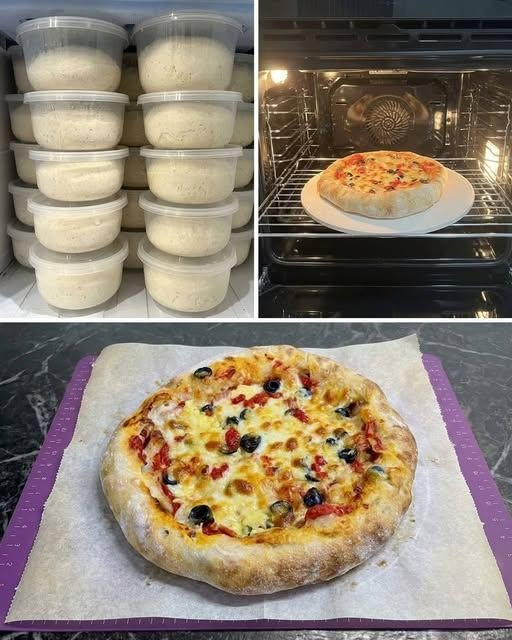
A successful sourdough discard pizza should have a crisp bottom, chewy center, golden edges, and a subtle tangy sourdough flavor.
The combination of tomato sauce, melted mozzarella, fresh vegetables, herbs, and a high-temperature bake creates a homemade pizza that is flavorful and satisfying.
It is an especially useful recipe for sourdough bakers because it transforms leftover discard into a delicious meal rather than letting it go to waste. Once you master the basic dough, experiment with different sauces, cheeses, vegetables, herbs, and other toppings to create your own favorite sourdough discard pizza.

