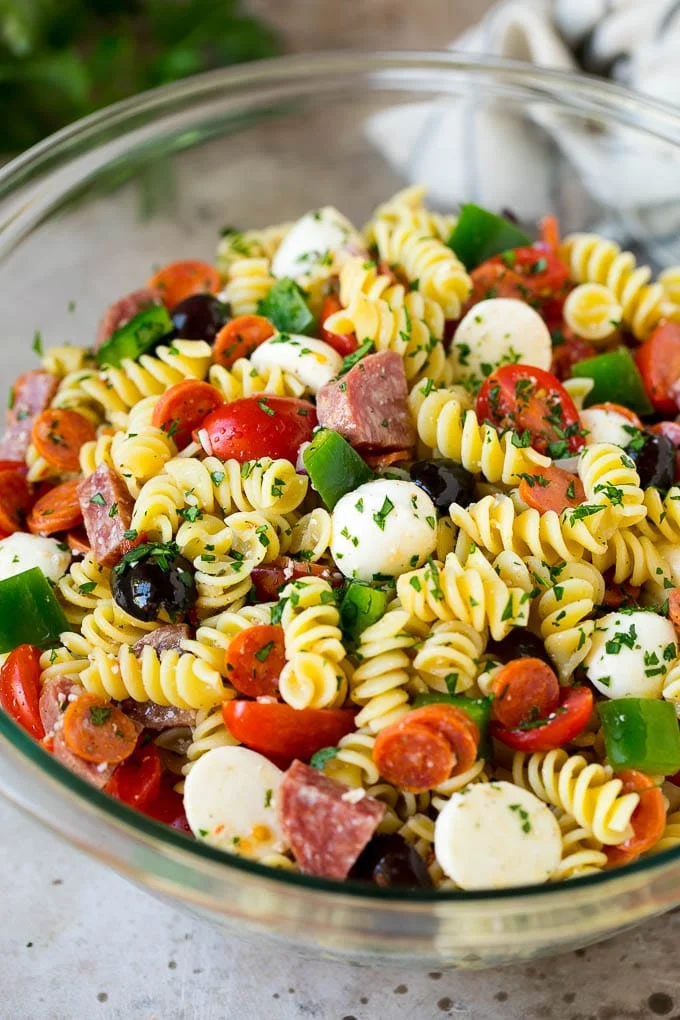
Ingredients
For approximately 6 servings, you will need:
For the Salad
- 12 ounces (340 g) rotini, fusilli, or penne pasta
- 1 cup cherry tomatoes, halved
- 1 cup cucumber, diced
- ½ cup red bell pepper, diced
- ½ cup yellow bell pepper, diced
- ½ cup black or green olives, sliced
- ½ cup mozzarella pearls or cubed mozzarella
- ¼ cup red onion, finely sliced
- ¼ cup pepperoncini, sliced
- ¼ cup fresh parsley, chopped
- 2 tablespoons fresh basil, chopped
For the Dressing
- ½ cup extra-virgin olive oil
- ¼ cup red wine vinegar
- 1 tablespoon lemon juice
- 1 teaspoon Italian seasoning
- 1 teaspoon Dijon mustard
- 1 small garlic clove, finely minced
- ½ teaspoon honey or sugar, optional
- ½ teaspoon salt
- ¼ teaspoon freshly ground black pepper
- ¼ teaspoon red pepper flakes, optional
Cooking the Pasta
Begin by bringing a large pot of salted water to a boil.
Add the pasta and cook according to the package directions until al dente. The pasta should be tender but still have a slight firmness when bitten.
Avoid overcooking the pasta because soft pasta can become mushy when mixed with dressing and vegetables.
Once cooked, drain the pasta thoroughly.
Rinse it briefly under cool water to stop the cooking process and bring down the temperature. This is particularly useful when preparing pasta salad because it prevents the pasta from continuing to cook.
Transfer the pasta to a large mixing bowl and allow it to cool for a few minutes.
Preparing the Vegetables
While the pasta cooks, prepare the vegetables.
Cut the cherry tomatoes in half and dice the cucumber and bell peppers into small, bite-sized pieces.
Thinly slice the red onion. If you prefer a milder onion flavor, soak the sliced onion in cold water for approximately 5–10 minutes, then drain it thoroughly.
Slice the olives and pepperoncini.
The vegetables do not need to be exactly the same size, but keeping them relatively bite-sized makes the salad easier to eat and ensures that every forkful contains a good combination of ingredients.
Making the Italian Dressing
The homemade dressing is what brings the entire salad together.
In a small bowl or jar, combine the olive oil, red wine vinegar, lemon juice, Italian seasoning, Dijon mustard, minced garlic, salt, black pepper, and optional honey or sugar.
If you enjoy a little heat, add red pepper flakes.
Whisk the ingredients vigorously until the dressing becomes well combined.
Alternatively, place everything in a jar with a secure lid and shake until emulsified.
Taste the dressing and adjust the seasoning. Add more vinegar for extra tang, olive oil for a milder flavor, or a little honey if you prefer a slightly sweeter dressing.
Combining the Salad
Place the cooled pasta in a large serving bowl.
Add the cherry tomatoes, cucumber, bell peppers, olives, red onion, pepperoncini, mozzarella, parsley, and basil.
Pour approximately two-thirds of the dressing over the salad.
Gently toss everything together until the pasta and vegetables are evenly coated.
Avoid stirring too aggressively because you do not want to crush the tomatoes or break the mozzarella.
Taste the salad and add more dressing if necessary.
Chilling the Pasta Salad
For the best flavor, cover the salad and refrigerate it for at least 30 minutes before serving.
If you have time, allow it to chill for one to two hours. This gives the pasta an opportunity to absorb the dressing and allows the flavors of the vegetables, herbs, and seasoning to blend together.
Before serving, remove the salad from the refrigerator and toss it again.
Pasta tends to absorb dressing as it sits, so you may want to add a small amount of the remaining dressing to restore its moisture and freshness.
Optional Additions
Italian Pasta Salad is extremely adaptable.
For additional protein, add grilled chicken, sliced turkey, salami, pepperoni, or chickpeas.
For a vegetarian version, simply leave out the meat and add extra mozzarella, chickpeas, or vegetables.
You can also add artichoke hearts, roasted red peppers, sun-dried tomatoes, broccoli, spinach, or fresh arugula.
For extra richness, sprinkle freshly grated Parmesan cheese over the finished salad.
If you prefer a stronger Mediterranean-style flavor, add crumbled feta cheese instead of mozzarella.
Choosing the Right Pasta
Short pasta shapes are generally best for pasta salad because their curves and ridges hold the dressing and small pieces of vegetables.
Rotini and fusilli are excellent choices because their spiral shapes capture the dressing beautifully.
Penne and bow-tie pasta also work well.
When cooking the pasta, make sure you use plenty of salted water. Properly seasoned pasta provides flavor throughout the salad rather than relying entirely on the dressing.
Tips for the Best Italian Pasta Salad
Do not overcook the pasta. Al dente pasta provides the best texture.
Cool the pasta before adding delicate vegetables such as tomatoes and cucumber. This helps prevent them from becoming soft.
Use fresh herbs whenever possible. Fresh basil and parsley add brightness that dried herbs cannot completely replicate.
Do not add all of the dressing at once if you are preparing the salad far in advance. Reserve some and add it shortly before serving if the pasta absorbs too much.
Taste the salad after chilling. Cold foods can taste less salty than warm foods, so you may need to adjust the seasoning before serving.
For the best texture, add crunchy toppings such as nuts or seeds immediately before eating.
Storage
Store Italian Pasta Salad in an airtight container in the refrigerator.
It is generally best enjoyed within a few days. The vegetables may soften gradually, while the pasta continues absorbing the dressing.
If the salad looks dry after refrigeration, add a splash of olive oil and red wine vinegar or a little reserved dressing. Toss gently before serving.
Do not leave the salad at room temperature for extended periods, particularly during warm weather.
Serving Suggestions
Italian Pasta Salad is delicious served alongside grilled chicken, steak, burgers, sandwiches, or roasted vegetables.
It is also an excellent picnic or potluck dish because it can be prepared ahead of time and transported easily in a sealed container.
For a complete light meal, serve a generous bowl of pasta salad with fresh fruit and crusty bread.
At a gathering, transfer the salad to a large serving bowl and garnish with fresh basil, parsley, mozzarella pearls, and a drizzle of olive oil.
Final Thoughts
Italian Pasta Salad is a simple, colorful, and versatile recipe that works for almost any occasion. Tender pasta, fresh vegetables, olives, mozzarella, herbs, and a tangy homemade dressing come together to create a dish that is refreshing yet satisfying.
The recipe is easy to customize, so you can adjust the ingredients based on your preferences or whatever is available in your kitchen. Add chicken for protein, chickpeas for a vegetarian option, extra vegetables for freshness, or Parmesan and feta for additional richness.
Whether you are preparing lunch for your family, bringing a dish to a picnic, or looking for an easy make-ahead side dish, Italian Pasta Salad is a dependable choice. Prepare it ahead of time, let the flavors blend in the refrigerator, and give it a final toss just before serving for a fresh and flavorful result.

