Ingredients
For the Fruit Mixture
- 1 cup raisins
- 1 cup mixed dried fruit
- ½ cup chopped candied cherries
- ½ cup chopped dried apricots or dates
- ½ cup orange juice
- 1 teaspoon orange zest
- ½ cup chopped almonds or walnuts
For the Cake
- 2 cups all-purpose flour
- 1 teaspoon baking powder
- ½ teaspoon baking soda
- ½ teaspoon salt
- 1 teaspoon ground cinnamon
- ½ teaspoon ground nutmeg
- ¼ teaspoon ground cloves
- ¼ teaspoon ground ginger
- 1 cup unsalted butter, softened
- 1 cup brown sugar
- ½ cup granulated sugar
- 4 large eggs, at room temperature
- 2 teaspoons vanilla extract
- ½ cup milk
- 2 tablespoons orange juice
Preparing the Fruit
Place the raisins, mixed dried fruit, cherries, and dried apricots or dates in a saucepan.
Pour in the orange juice and add the orange zest. Warm the mixture over low heat for approximately 3–5 minutes. Do not boil it vigorously. The purpose is simply to soften and plump the dried fruit.
Remove the saucepan from the heat and allow the fruit to cool completely.
For an even richer traditional flavor, the fruit can be soaked for several hours or overnight before baking. If you prefer not to use alcohol, orange juice, apple juice, or strong black tea can be used instead.
Once the fruit has cooled, gently mix in the chopped almonds or walnuts.
Preparing the Oven and Pan
Preheat your oven to 160°C (320°F).
Grease a deep 8-inch or 9-inch round cake pan. Line the bottom and sides with parchment paper.
Fruit cake is dense and needs gentle, even baking. Baking at a slightly lower temperature helps the center cook properly without causing the outside to become too dark.
If your pan is shallow, reduce the amount of batter or divide it between two pans.
Preparing the Dry Ingredients
In a medium bowl, sift together the flour, baking powder, baking soda, salt, cinnamon, nutmeg, cloves, and ginger.
Mix the ingredients thoroughly.
The spices give the fruit cake its characteristic warm aroma. You can adjust them slightly according to your taste, but avoid adding excessive amounts because they can overpower the dried fruit.
Set the dry ingredients aside.
Creaming the Butter and Sugar
Place the softened butter in a large mixing bowl.
Add the brown sugar and granulated sugar.
Beat the butter and sugar together for approximately 3–5 minutes until the mixture becomes lighter, creamy, and fluffy.
This step incorporates air into the batter and helps create a lighter texture despite the large amount of fruit.
If using an electric mixer, use medium speed. Scrape down the sides of the bowl occasionally to make sure everything is evenly combined.
Adding the Eggs
Add the eggs one at a time.
Beat well after each addition before adding the next egg.
If the mixture looks slightly curdled, do not worry. It will come together when the flour is added.
Add the vanilla extract and mix briefly.
Combining the Batter
Add approximately one-third of the dry ingredients to the butter mixture.
Fold gently.
Add half of the milk and orange juice, then mix gently.
Continue alternating between the dry ingredients and the remaining liquid until everything is incorporated.
Do not overmix the batter. Stop as soon as there are no large streaks of flour.
Overmixing can develop too much gluten and make the finished cake heavier than necessary.
Adding the Fruit and Nuts
Add the cooled fruit and nut mixture to the cake batter.
Use a large spatula to fold everything together.
Make sure the dried fruit and nuts are distributed evenly throughout the batter.
If the fruit mixture contains a lot of excess liquid, drain some of it before adding it to the batter. Too much liquid can make the cake excessively dense.
Filling the Cake Pan
Transfer the batter into the prepared cake pan.
Use a spatula to spread the batter evenly.
Gently tap the pan against the countertop once or twice to remove large air pockets.
Smooth the surface.
For a decorative finish, arrange a few additional cherries, almonds, or walnuts on top of the batter.
Do not cover the entire surface with nuts because they can become too dark during baking.
Baking the Fruit Cake
Place the cake in the center of the preheated oven.
Bake at 160°C (320°F) for approximately 70–90 minutes.
The exact baking time depends on the size and depth of the pan.
Begin checking after about 65 minutes. Insert a wooden skewer or cake tester into the center. It should come out clean or with a few moist crumbs attached.
If the top becomes dark before the center is fully baked, loosely cover the cake with aluminum foil and continue baking.
Avoid opening the oven repeatedly because this can cause the cake to sink.
Cooling
Once fully baked, remove the cake from the oven.
Allow it to cool in the pan for approximately 15–20 minutes.
Then carefully remove it from the pan and transfer it to a wire rack.
Allow the cake to cool completely before slicing.
Fruit cake often tastes even better after resting for several hours because the spices and dried fruits have time to develop their flavors.
Optional Glaze
For a shiny finish, warm 2 tablespoons of apricot jam with 1 teaspoon of water.
Brush the warm glaze lightly over the cooled cake.
You can decorate the top with additional cherries, almonds, walnuts, or a dusting of powdered sugar.
Tips for a Moist Fruit Cake
Use room-temperature butter and eggs. They combine more easily and produce a smoother batter.
Do not use very high oven temperatures. Fruit cake is dense and benefits from slow, gentle baking.
Make sure the fruit is not excessively wet before adding it to the batter.
Do not overmix once the flour has been added.
Allow the finished cake to cool completely before cutting. Cutting while it is hot can cause the cake to crumble.
For deeper flavor, prepare the cake one day before serving and keep it tightly wrapped at room temperature.
Storage
Once completely cool, wrap the fruit cake tightly in plastic wrap or place it in an airtight container.
It can be kept at room temperature for several days in a cool, dry place.
For longer storage, refrigerate it in a well-sealed container.
Before serving refrigerated cake, allow it to come to room temperature. This softens the butter and brings out the flavor.
Serving
Cut the cake into thin or medium-sized slices and serve with tea, coffee, or milk.
It can also be served with whipped cream, vanilla ice cream, custard, or a light dusting of powdered sugar.
The combination of buttery cake, chewy dried fruit, crunchy nuts, and fragrant spices makes traditional fruit cake a comforting dessert for any occasion.
Final Result
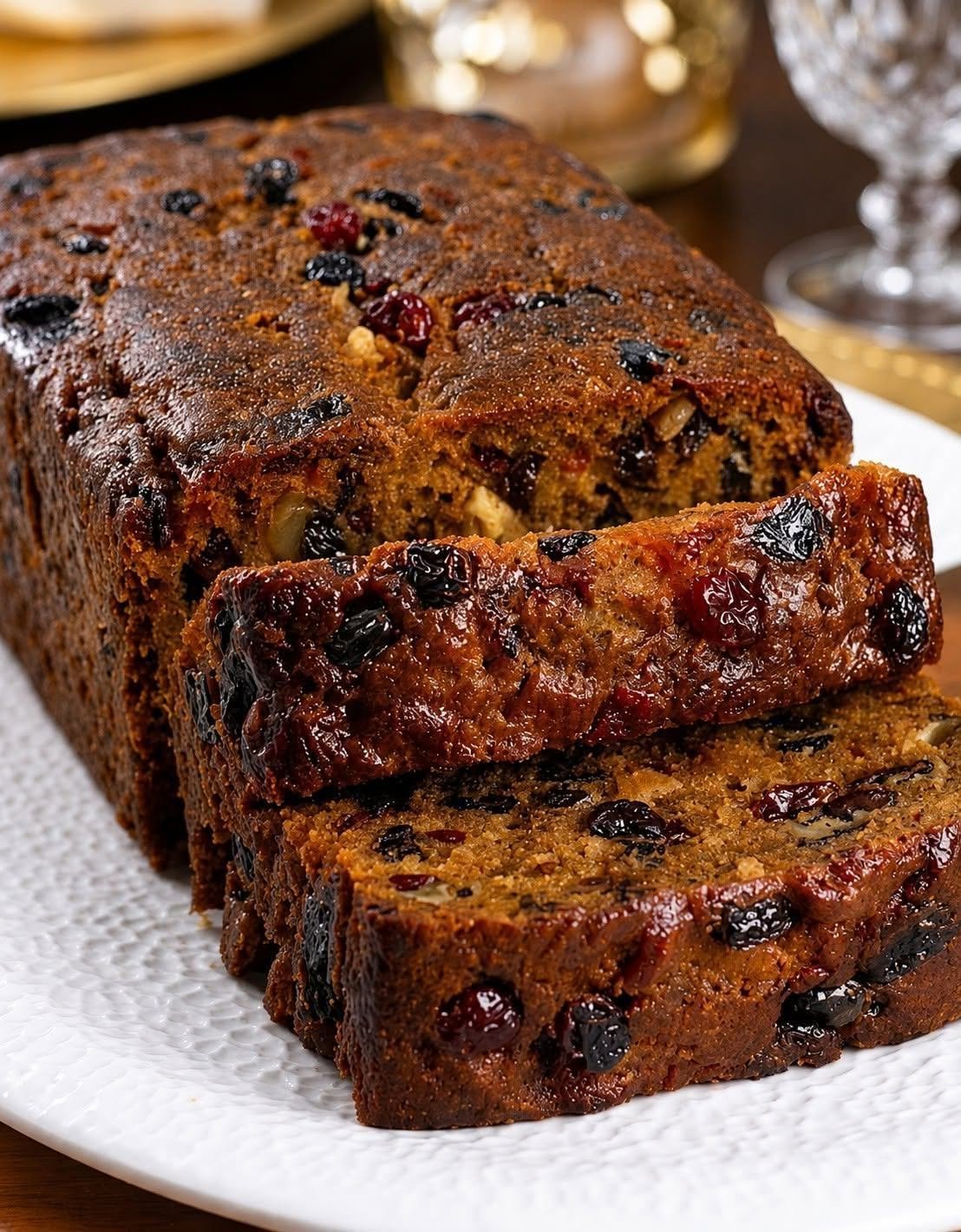
A properly baked traditional fruit cake should be moist, rich, fragrant, and packed with evenly distributed fruit and nuts. The exterior should be golden brown while the inside remains tender rather than dry.
The warm combination of cinnamon, nutmeg, cloves, ginger, and orange gives the cake its classic festive character, while the dried fruit provides natural sweetness and chewy texture.
Whether served during the holidays or enjoyed with an afternoon cup of tea, this traditional fruit cake is a timeless homemade dessert that can be made and enjoyed throughout the year.

