Ingredients
For approximately 6 flatbreads, you will need:
- 2 cups (250 g) all-purpose flour
- ½ teaspoon salt
- 1 teaspoon sugar
- ¾ teaspoon baking powder
- 2 tablespoons plain yogurt
- 1 tablespoon vegetable oil or another neutral oil
- Approximately ¾ cup (180 ml) warm water
- Extra flour, for rolling
- Butter or ghee, for brushing
The amount of water can vary slightly depending on the flour. Start with less water and add more gradually. You are looking for a soft dough rather than a stiff one.
Step 1: Prepare the Dough
Begin by adding the flour to a large mixing bowl. Add the salt, sugar, and baking powder and mix everything together.
Next, add the yogurt and oil. Use your fingers, a spoon, or a wooden spatula to begin combining the ingredients. Slowly pour in the warm water while mixing.
Don’t add all the water at once. Different types of flour absorb different amounts of liquid, so you may need slightly more or less than the amount listed.
Once the dough begins coming together, use your hands to bring it into a rough ball. It should feel soft and slightly tacky, but it should not be extremely sticky.
Step 2: Knead the Dough
Transfer the dough to a lightly floured surface and knead it for approximately 5–7 minutes.
Push the dough forward with the heel of your hand, fold it back toward you, turn it slightly, and repeat. Continue until the dough becomes smoother and more elastic.
If the dough feels very sticky, add a tiny amount of flour at a time. Avoid adding too much flour because a stiff dough will produce flatter, tougher bread.
Once the dough is smooth, shape it into a ball and place it back in the bowl. Lightly coat the surface with a little oil if desired.
Cover the bowl with a clean kitchen towel, plate, or plastic wrap and let the dough rest for 20–30 minutes.
This resting period is important. It gives the flour time to fully absorb the water and allows the gluten to relax, making the dough much easier to roll.
Step 3: Divide the Dough
After resting, uncover the dough and place it on your work surface.
Divide it into 6 approximately equal portions. You can use a knife or dough cutter to do this.
Roll each portion between your palms to form a smooth ball. Keep the dough balls covered while you work so they don’t develop a dry surface.
If your kitchen is particularly warm or dry, covering the dough is especially important.
Step 4: Roll the Flatbreads
Take one dough ball and place it on a lightly floured surface. Sprinkle a small amount of flour over the top.
Using a rolling pin, gently roll the dough into a round approximately 6–7 inches (15–18 cm) in diameter.
Try to keep the thickness fairly even. The bread doesn’t need to be perfectly circular—homemade flatbread is supposed to look rustic.
Avoid rolling the dough excessively thin. A little thickness helps the finished flatbread remain soft and chewy.
Repeat with the remaining dough balls, keeping the rolled flatbreads covered with a clean towel.
Step 5: Heat the Skillet
Place a heavy skillet, cast-iron pan, or nonstick skillet over medium-high heat.
Allow it to become properly hot before cooking the first flatbread. You don’t need to add oil to the skillet.
A properly heated skillet helps the bread cook quickly and develop attractive golden-brown spots without becoming dry.
If the skillet is not hot enough, the flatbread may take too long to cook and can become tough. If it is extremely hot, however, the outside may burn before the inside has cooked.
Step 6: Cook the Flatbread
Carefully place one rolled flatbread onto the hot, dry skillet.
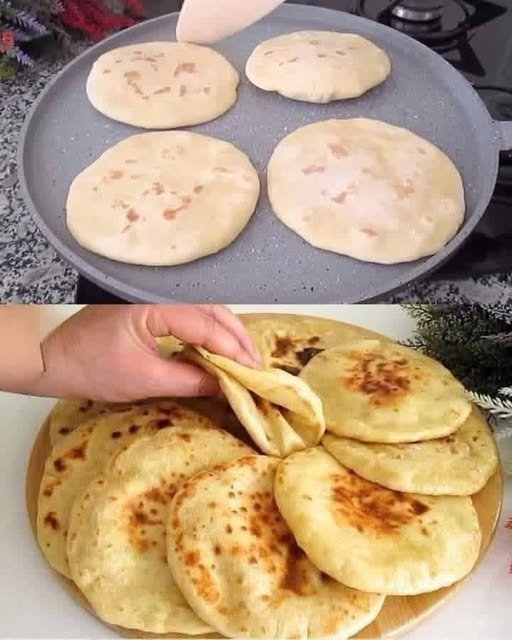
Cook for approximately 30–45 seconds, or until you begin to see small bubbles forming on the surface and the underside develops a few light golden spots.
Flip the flatbread using a spatula or tongs.
Cook the second side for another 30–45 seconds. You should see additional golden-brown spots appear.
If large bubbles form, gently press them with a spatula to help the bread cook evenly.
Avoid leaving the flatbread on the skillet for too long. Overcooking is one of the most common reasons homemade flatbread becomes hard or dry.
Once cooked, transfer the flatbread to a plate and immediately brush it with melted butter or ghee.
Continue cooking the remaining flatbreads in the same way.
Step 7: Keep the Flatbreads Soft
As each flatbread comes off the skillet, stack it on top of the previous one and cover the stack with a clean kitchen towel.
The trapped warmth and steam help keep the bread soft and flexible.
For an especially tender finish, brush each flatbread lightly with butter or ghee before stacking it.
Don’t leave cooked flatbreads uncovered for a long time, particularly in a dry environment, because they can lose moisture quickly.
Helpful Tips for Perfect Flatbread
Use warm water: Warm water helps bring the dough together smoothly. It should be warm rather than hot.
Don’t make the dough too stiff: A soft dough produces a softer flatbread. Add flour sparingly during kneading and rolling.
Let the dough rest: Even a 20-minute rest makes the dough easier to work with and helps prevent it from springing back while rolling.
Preheat the skillet: A hot skillet allows the flatbread to cook quickly and develop golden spots.
Don’t overcook: Flatbread should cook quickly. If you leave it on the skillet until it becomes deeply browned and crisp, it will lose its softness.
Cover immediately: Keep cooked flatbreads covered with a clean towel to retain their warmth and moisture.
Serving Ideas
These soft skillet flatbreads are incredibly versatile. Serve them warm with butter or ghee alongside your favorite curry, dal, chickpeas, or vegetable dishes.
They are also excellent with grilled chicken, kebabs, roasted meat, or spicy vegetables. For breakfast, serve them with scrambled eggs, omelets, cheese, or a savory potato filling.
You can turn them into wraps by filling them with cooked chicken, salad, yogurt sauce, and fresh vegetables. For a quick snack, spread a warm flatbread with butter and honey or a little jam.
Storing and Reheating
Fresh flatbreads are best served immediately, but leftovers can be stored in an airtight container or sealed food bag once completely cooled.
For short-term storage, keep them at room temperature for the day. For longer storage, refrigerate them or freeze them with sheets of parchment or baking paper between the flatbreads.
To reheat, warm them briefly in a skillet over medium heat. You can also microwave them for a few seconds while covered with a slightly damp paper towel.
Frozen flatbreads can be reheated directly from frozen in a hot skillet.
Final Thoughts
Making soft flatbread at home doesn’t have to be difficult. With a handful of simple ingredients, a little kneading, and a hot skillet, you can make warm, tender bread in minutes.
The most important things to remember are to keep the dough soft, allow it to rest, cook the flatbreads quickly, and cover them immediately after cooking. Once you’ve made this recipe a few times, you can easily adjust the thickness and size to suit your meals.
Serve them warm with your favorite dishes, brush them with butter or ghee, and enjoy the simple pleasure of freshly made homemade flatbread.

